

If you’ve just passed your 12th and your dreams are up in the clouds. This is your complete roadmap for How to Become a Pilot in India After 12th Step by Step. We’ll take it step-by-step, eligibility, getting your medicals, earning your licenses, clocking those necessary flying hours, right up to your entry into an airline cockpit.
Step 1. Getting Your Head in the Clouds:
The Eligibility & Subject Check
Think of this as your minimum clearance for takeoff. Before you commit time and massive funds to flight school, you absolutely must satisfy the baseline eligibility requirements set by the DGCA.
The Must-Haves:
The Age Ladder:
You can start your journey early! You need to be at least 16 years old to start your Student Pilot License (SPL) training, 17 for the Private Pilot License (PPL), and 18 to finally get your Commercial Pilot License (CPL).
The Education Twist:
This used to be the biggest gatekeeper! Traditionally, passing your 12th grade with Physics and Mathematics was non-negotiable for CPL training.
⚠️ BIG NEWS:
As of 2025, the DGCA has made a groundbreaking proposal to allow students from the Arts and Commerce streams to also become eligible! This means the cockpit door is potentially opening much wider. However, keep in mind this is still a proposal pending final government approval, so always have a backup plan (like clearing these subjects separately through NIOS or an approved bridging course) until the rule is officially notified.
The Language:
The universal language of aviation is English. You must be able to read, write, and speak proficiently in English. All radio communication, manuals, and air traffic control commands are in English, so this is a key foundational skill.
Crucial Pilot Rule:
Always check the latest official DGCA circulars before making any large financial decision. Rules in aviation are constantly evolving, and you want to be on the cutting edge of the eligibility criteria!

Step 2. The Health Check: DGCA Medicals—Your Body’s Flight Certification 🩺
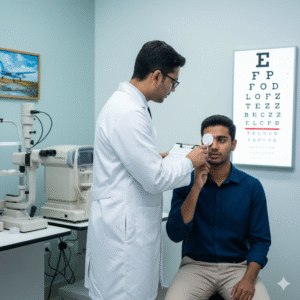
Even if you aced Physics and Math, you simply cannot fly for a living unless you pass the notorious Class 1 Medical Test. Think of this as your body’s ultimate flight certification. The DGCA needs absolute assurance that both your mind and body are fit to safely operate a multi-ton aircraft with hundreds of people onboard.
What Does the Checkup Involve?
The examinations are extensive and must be conducted by a DGCA-approved medical practitioner:
Eyesight:
This goes beyond just reading the chart! They check your visual acuity, depth perception, and most importantly, your colour perception (you must be able to distinguish navigation lights, display colours, and certain charting symbols).
Ears and Hearing:
Your hearing needs to be excellent, especially for radio communication. They check for any inner ear issues that could affect balance or cause discomfort during pressure changes.
The Engine Room (Cardiovascular):
This is a thorough check of your heart and circulation, including an Electrocardiogram (ECG) and blood pressure monitoring, ensuring your heart can handle the stresses of flying.
Overall System Check:
This includes neurological fitness, general physical exams, and lab tests.
The Mind Check:
In some instances, a psychological assessment is included to ensure you have the mental fortitude and stable temperament required for critical decision-making under pressure.
Pro-Tip:
Get This Done FIRST! Seriously, before you pay a single rupee for ground school or flight hours, get your initial Class 2 Medical done (you need this to start training) and aim to clear the Class 1 Medical standard as soon as you can. If, for any medical reason, you cannot clear the mandatory standards, all the future steps—and the massive financial investment—simply won’t matter. Save your money and your heartache!
Step 3. Your First Wings: Earning the Student Pilot License (SPL)
Medical cleared? Fantastic! You’ve got the all-clear from the doctor, which means it’s time to get your very first piece of paper that lets you touch an aircraft: the Student Pilot License (SPL). This license is the official stamp of approval that allows you to start your dual training—meaning, flying under the watchful eye of a certified instructor.
How to Get Your SPL:
This is less about intense flying and more about showing you know the basics of safety and airmanship. The process is relatively straightforward:
The Theory Test:
You’ll have to pass a short, basic written exam. Don’t worry, it’s not the full-blown DGCA exam yet! This test covers fundamental rules of the air and the very basic theory of flight. It just proves you won’t accidentally taxi onto an active runway.
The Interview:
You will face an oral evaluation conducted by the Flying School’s Chief Flying Instructor (CFI). They want to check your motivation, commitment, and whether you grasped the essentials you learned in ground school. Think of it as a pre-flight briefing for your brain!
Medical in Hand:
You must, of course, hold that shiny, valid Class 1 Medical Certificate. Once you have your SPL, you are officially a “Student Pilot” and can begin the most exciting part: learning to fly!
Step 4. The Freedom Ticket: Achieving the Private Pilot Licence (PPL)
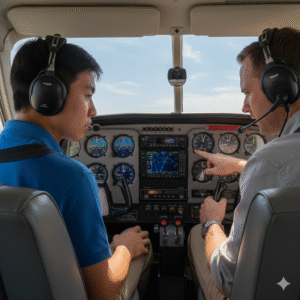
The Student Pilot Licence (SPL) got you in the door; the Private Pilot Licence (PPL) is your first real set of wings! This is the license that proves you can operate an aircraft safely and independently. Think of it as earning your driver’s license for the sky—it allows you to fly on your own, take friends along, and explore, but you still can’t charge anyone for the ride.
What It Takes to Get Your PPL:
To achieve this foundational license, you shift from pure theory to rigorous practical application:
Clocking the Hours: You must log a minimum of 40 to 50 total flying hours. This time is divided between:
-
- Dual Time: Flying with your instructor right beside you.
- Solo Time: The exhilarating moments when you fly the aircraft completely on your own, proving your independence and skill.
Acing the Theory: You’ll pass several written exams that cover:
-
- Air Regulations: The traffic rules of the sky.
-
- Aviation Meteorology: Understanding weather and its impact on flight.
-
- Air Navigation: Knowing how to plan a route and get from A to B safely.
-
- Aircraft Technical Knowledge: Understanding the basics of the aircraft you fly.
- The Final Exam: The entire process culminates in a final flight test (called a Skill Test) conducted by a qualified DGCA Examiner. This is where you demonstrate to a higher authority that you can handle the aircraft, communicate effectively, and manage normal and emergency procedures.
The PPL is not the finish line, but it is the solid, non-negotiable foundation upon which your entire commercial career will be built.
Step 5. The Professional Leap: Commercial Pilot Licence (CPL) Training 🛫
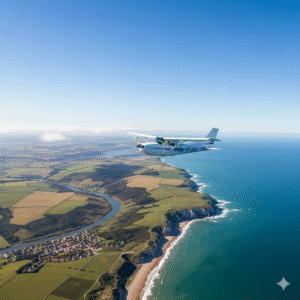
This is the big one—the phase where you transition from a hobbyist flyer (PPL holder) to a certified professional. Commercial Pilot Licence (CPL) training pushes your capabilities to the level required to be trusted with an airline job. This license is your official ticket to flying for hire or reward!
What it takes to get your CPL:
The requirements here are far more intensive, mixing vast amounts of practical flying with advanced theoretical knowledge:
- The 200-Hour Mark: To be eligible for the CPL, you must log a minimum of 200 hours of total flying time. This isn’t just random flying; it’s a meticulously logged record that must include specific minimum hours in:
- Pilot-in-Command (PIC) / Solo
- Cross-Country flying (long-distance navigation)
- Instrument Time (flying only by referring to cockpit instruments)
- Night Flying
- Intense Ground School: You’ll complete advanced ground school covering all DGCA mandatory theory subjects, including advanced Air Navigation, Air Regulations, and Technical General/Specific.
- DGCA Written Exams: You must pass all the rigorous DGCA written papers. These exams are comprehensive and are often the biggest hurdle for aspiring pilots.
- Logbook and Endorsements: Your pilot logbooks must be impeccable, meticulously documenting every minute of flight time, aircraft used, and conditions, all verified by strict instructor endorsements.
- The Final Skill Test: A final flight assessment is conducted by a DGCA examiner to prove you are competent, safe, and professional enough to hold a CPL.
Part 1: The Practical Test (Transmission):
- This is a simulated real-world communication scenario. You are tested on your ability to use correct, standardized phraseology, follow radio procedures, and handle situations (like distress calls) accurately and quickly. It’s less about what you say, and more about how you say it—clearly, concisely, and professionally.
Part 2: The Oral Exam (Viva): This is a viva that tests your knowledge of:
- Regulations and Procedures: The rules governing radio usage.
- Radio Principles and Practice: Basic technical knowledge of how the equipment works.Timeline Check: This phase typically takes 18 to 24 months or more. The actual duration depends heavily on external factors like weather conditions, the availability of training aircraft and examiners, and, most importantly, your consistency and performance. It’s a marathon, not a sprint!
Step 6. Speaking the Language of the Sky: The RTR License 🗣️
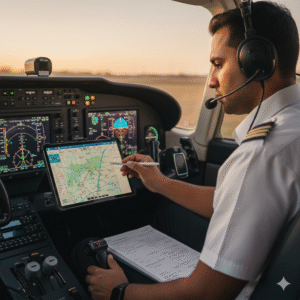
You can fly the plane, but can you talk to the ground? You need a specific license—the Radio Telephony Restricted (Aeronautical) or RTR(A)—to legally operate the radio in your cockpit and communicate with Air Traffic Control (ATC) over Indian airspace. This is a critical safety component; without it, you can’t get legal clearance to act as Pilot-in-Command in India.
The RTR Test: Clarity is King
This license is issued by the Wireless Planning and Coordination (WPC) Wing of the Ministry of Communications (though sometimes the exam is coordinated through the DGCA). It is a test of precision and cool-headed communication:
Part 1: The Practical Test (Transmission):
This is a simulated real-world communication scenario. You are tested on your ability to use correct, standardized phraseology, follow radio procedures, and handle situations (like distress calls) accurately and quickly. It’s less about what you say, and more about how you say it—clearly, concisely, and professionally.
Part 2: The Oral Exam (Viva): This is a viva that tests your knowledge of:
- Regulations and Procedures: The rules governing radio usage.
- Radio Principles and Practice: Basic technical knowledge of how the equipment works.
The Stakes: The RTR is tough because it’s a practical skill test, and the pass rate can be low. But once you pass, you have the “voice of a pilot,” ensuring safe and efficient communication every time you take to the skies.
Step 7. Mastering the Machines: Instrument and Multi-Engine Ratings 💡
Congratulations, you have your CPL! You are a licensed professional pilot. However, to be truly airline-ready, you need specialized endorsements that prove you can handle the complexity of commercial jets and challenging weather. These are the Instrument Rating (IR) and Multi-Engine Rating (MER).
Instrument Rating (IR): Seeing in the Clouds
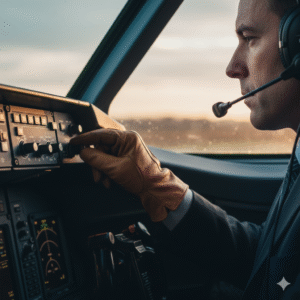
- What it is: This rating qualifies you to fly under Instrument Flight Rules (IFR), meaning you can operate an aircraft safely in weather conditions (like heavy rain or clouds) where you cannot rely on looking outside.
- The Skill: You learn to rely exclusively on your cockpit instruments—the artificial horizon, altimeter, vertical speed indicator, etc.—to navigate, maintain altitude, and land. It’s essential for modern airline operations.
Multi-Engine Rating (MER): Powering Up
- What it is: The bulk of commercial aircraft (from regional turboprops to large passenger jets) have two or more engines. The MER trains you to fly aircraft that are more powerful and complex, and crucially, teaches you how to handle the critical emergency of an engine failure.
- The Skill: You master the aerodynamics and procedures specific to multi-engine aircraft, which are fundamental requirements for virtually every airline recruitment drive.
The Takeaway: These two ratings prove you can safely handle complex aircraft and challenging conditions—qualities every airline requires in its pilots.
Step 8. Specializing Your Skills: The Type Rating ✈️
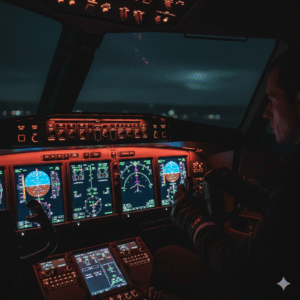
You now have your CPL, IR, and MER—you are a professional pilot! But a license only proves you can fly an airplane. To fly the huge commercial jets that dominate the sky, you need a Type Rating. This is sophisticated, aircraft-specific training that qualifies you to operate a specific model, such as the Airbus A320, Boeing 737, or ATR.
The Investment in Specialization:
- Intense Training: This involves rigorous ground classes focusing on the specific systems, emergency procedures, and performance characteristics of that single aircraft type.
- Simulator Immersion: The majority of the training occurs in Full Flight Simulators (FFS), which perfectly replicate the cockpit environment and movement. You practice everything from a routine take-off to catastrophic engine fires and severe weather landings, all in a safe environment.
- The Cost Factor: Be prepared—the Type Rating is a significant financial investment, often costing anywhere from ₹15 lakh to ₹25 lakh or even more, depending on the aircraft model and the training facility.
The Sponsorship Advantage: Because of the high cost, many aspiring pilots apply for Cadet Pilot Schemes run by major airlines (like IndiGo, Vistara, or Air India). The airline often sponsors or finances the Type Rating in exchange for a service bond, providing a direct, though competitive, path to the cockpit.
9. Launch Day: Entering the Airline Cockpit 🚀
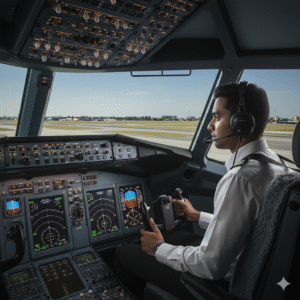
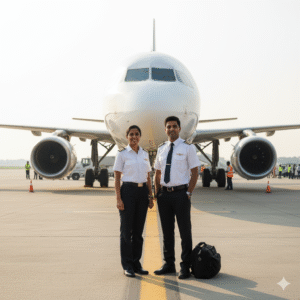
You’ve done the hard yards: you have your CPL, your IR, your MER, your RTR, and that all-important Type Rating. Now, the final step is turning that license into a livelihood. This is your official launch into flying commercially! You typically have two main pathways to secure that coveted First Officer uniform:
Option 1: The Cadet Pilot Programme 🎓
- What it is: This is often the most streamlined route. Airlines like IndiGo, Vistara, or Air India partner with FTOs to run dedicated cadet schemes.
- The Advantage: If you get accepted, the airline has an immediate need for you. Crucially, they often pay for or heavily subsidize your Type Rating training (the most expensive part) in exchange for a service bond. It’s a competitive but highly rewarding path that provides a clear trajectory to a job.
Option 2: Direct Entry First Officer (DEFO) 💼
- What it is: You apply directly to an airline as a qualified pilot.
- The Requirement: This usually requires you to have completed your entire training independently, including paying for and getting your own Type Rating (often on a high-demand aircraft like the A320 or B737). You must meet the specific flying hour and rating criteria the airline has published for entry.
Once hired, you complete the airline’s internal training protocols, and you begin your career as a Junior First Officer, flying passengers and cargo across the country and the world. The long journey from the 12th-grade student dreaming of the clouds is officially complete!
10. Practical Tips: Optimizing Your Cost & Planning 💰
Pilot training is a huge investment, so flying smart starts with financial planning. Here are some essential tips to help you manage the massive cost and keep your journey on track:
- Choose Wisely: The Flying School: Your flight training partner is everything. Opt for a DGCA-approved flying school in India that is completely transparent about its fee structure. Look for excellent student feedback regarding aircraft maintenance and availability—delays due to poor infrastructure cost you money.
- Fix Your Rates: Where possible, try to lock in fixed hourly rates for flying time. This protects you from sudden fuel price hikes or unexpected fee increases later in your training.
- The Budget Buffer: Extra flying hours are nearly always unavoidable, whether due to weather, aircraft snags, or needing extra practice. Always budget a buffer of 20% more flying time than the regulatory minimum (200 hours for CPL) to absorb these surprises without financial stress.
- Target Airline Schemes: Actively explore cadet programs or airline tie-ups. These highly competitive schemes can be a lifesaver, as the airline sometimes subsidizes or fully finances the most expensive part of your training: the Type Rating.
- Training Abroad? Factor Everything In: If you plan to train overseas (e.g., in the US, Canada, or New Zealand), your initial flight school fee is just the start. You must accurately factor in visa fees, accommodation, living expenses, travel costs, and the substantial cost of converting your foreign license to an Indian DGCA license once you return.
- Explore Funding Options: The fees are steep, but you have options. Diligently explore all avenues for educational loans (many banks offer special pilot training loans), scholarships, or potential sponsorships available both within India and abroad.

Timeframe & Cost Estimate
Now let’s examine how long this journey takes and how much money you’ll need, both in India and if you train abroad.
Timeline expectation:
-
Total duration: 2–3 years (sometimes longer)
-
Delays can come from aircraft availability, weather, and regulatory scheduling
Cost in India — Detailed Breakdown
Here’s an updated cost table showing stage-wise expenditure in India:
| Stage | Description | Approximate Cost (INR) |
|---|---|---|
| DGCA Class-1 Medical | Medical clearance | ₹8,000 – ₹15,000 |
| SPL | Written/oral, registration | ₹20,000 – ₹50,000 |
| PPL | 40–50 flight hours + exams | ₹6 – 10 lakh |
| CPL | 200 flight hours + ground training | ₹25 – 35 lakh |
| IR + MER | Simulator & instrument training | ₹4 – 7 lakh |
| Type Rating | Commercial aircraft type training | ₹15 – 25 lakh |
| Miscellaneous | Uniform, books, DGCA fees, stay, etc. | ₹2 – 4 lakh |
Estimated total (India): ₹35 – 60 lakh (varies by school, location, class of aircraft)
Source references:
-
Many Indian sources suggest CPL training costs in India are ₹35–50 lakh. Top Crew Aviation+2Top Crew Aviation+2
-
A flight school’s fee structuring example (first 40 hours at ₹13,000/hour) shows realistic, localized costs. Rajiv Gandhi Aviation Academy
Cost Comparison: India vs Abroad
Many students evaluate international training options (USA, Canada, South Africa) because of better infrastructure, more flying hours, and potentially faster course completion. Below is a comparative cost table:
| Country / Region | Cost Range (Local Currency / Converted to INR approx) | Notes, Advantages & Considerations |
|---|---|---|
| India | ₹35 – 60 lakh | No conversion costs; direct DGCA license; local training conditions |
| USA | USD 60,000 – 90,000 (~₹50 – 75 lakh) aeropilotsacademy.com+2Acron Aviation Academy+2 | Superior infrastructure, quicker training, but you must convert FAA to DGCA license, plus living & visa costs |
| Canada | CAD 55,000 – 80,000 (~₹35 – 50 lakh) aeropilotsacademy.com+1 | Favorable climate for flying in many regions; conversion issues and winters may delay training |
| South Africa | ZAR 450,000 – 650,000 for CPL (~₹20 – 35+ lakh) Top Crew Aviation+5Top Crew Aviation+5Top Crew Aviation+5 | Relatively lower cost, good weather, strong pilot training culture, but travel, visa, and accommodation add to the cost |
Observations & trade-offs:
-
Abroad training may have faster timelines due to more flying days and better resources.
-
However, license conversion (e.g., FAA → DGCA) may cost additional time and money.
-
Living expenses, visas, and travel often push the total cost up much higher than just training fees.
-
Infrastructure, aircraft availability, and instructor quality differ by location — not always guaranteed to be better abroad, especially in remote training centers.
Conclusion: Your Flight Path to the Cockpit
Becoming a pilot in India after 12th is a structured, demanding, but ultimately rewarding journey. It requires more than just a passion for flying—it demands meticulous planning, significant financial commitment, and unwavering dedication to master both the complex theory (DGCA exams) and the practical skills (200 flying hours).
The path starts with meeting DGCA eligibility and medical standards, progresses through the SPL and PPL for foundational knowledge, and culminates in the rigorous CPL, IR, and MER ratings. Remember, the final step to the airline cockpit is the expensive, aircraft-specific Type Rating, which you should aim to get either through an independent route or a competitive Airline Cadet Programme.
While the journey is long (typically 2-4 years of intensive training), the Indian aviation sector is booming, creating continuous demand for qualified, well-trained professionals. By following this roadmap, maintaining sharp focus, and ensuring your documentation is perfect, your dream of commanding a commercial jet can become a reality.
Frequently Asked Questions (FAQs)
Q1. How long does it actually take to become an airline pilot after Class 12?
The total process, from starting your CPL ground classes to getting hired as a First Officer, typically takes 3 to 4 years.
- CPL, IR, MER, RTR: 1.5 to 2.5 years (depending on flying school speed and exam success).
- Type Rating: 3 to 6 months.
- Airline Induction/Job Hunt: 6 months to 1 year.
Q2. Is the Physics and Mathematics requirement still mandatory for CPL?
Currently, yes, Class 12 with Physics and Maths is officially mandatory. However, the DGCA has recently proposed allowing Arts and Commerce students to qualify, possibly by clearing bridging courses. Always verify the latest official DGCA circulars for the final implementation of this groundbreaking rule change.
Q3. What is the biggest hurdle in pilot training?
The three biggest hurdles are:
- Clearing the DGCA Written Exams: The theory papers (especially Navigation and Regulations) are known for their high difficulty and low pass rates.
- Maintaining Medical Fitness (Class 1): You must pass this test before training and keep it renewed throughout your career.
- The Financial Cost: The overall training, especially the Type Rating, is extremely expensive.
Q4. What is the difference between CPL and Type Rating?
-
- CPL (Commercial Pilot Licence): A general license that allows you to fly for money/hire. It certifies that you can operate a small aircraft safely.
- Type Rating: A specific certification required to operate a particular commercial jet (e.g., Airbus A320). You cannot fly the A320 for an airline without the A320 Type Rating, even if you hold a CPL.
Q5. Should I train in India or abroad?
Both options are valid: