
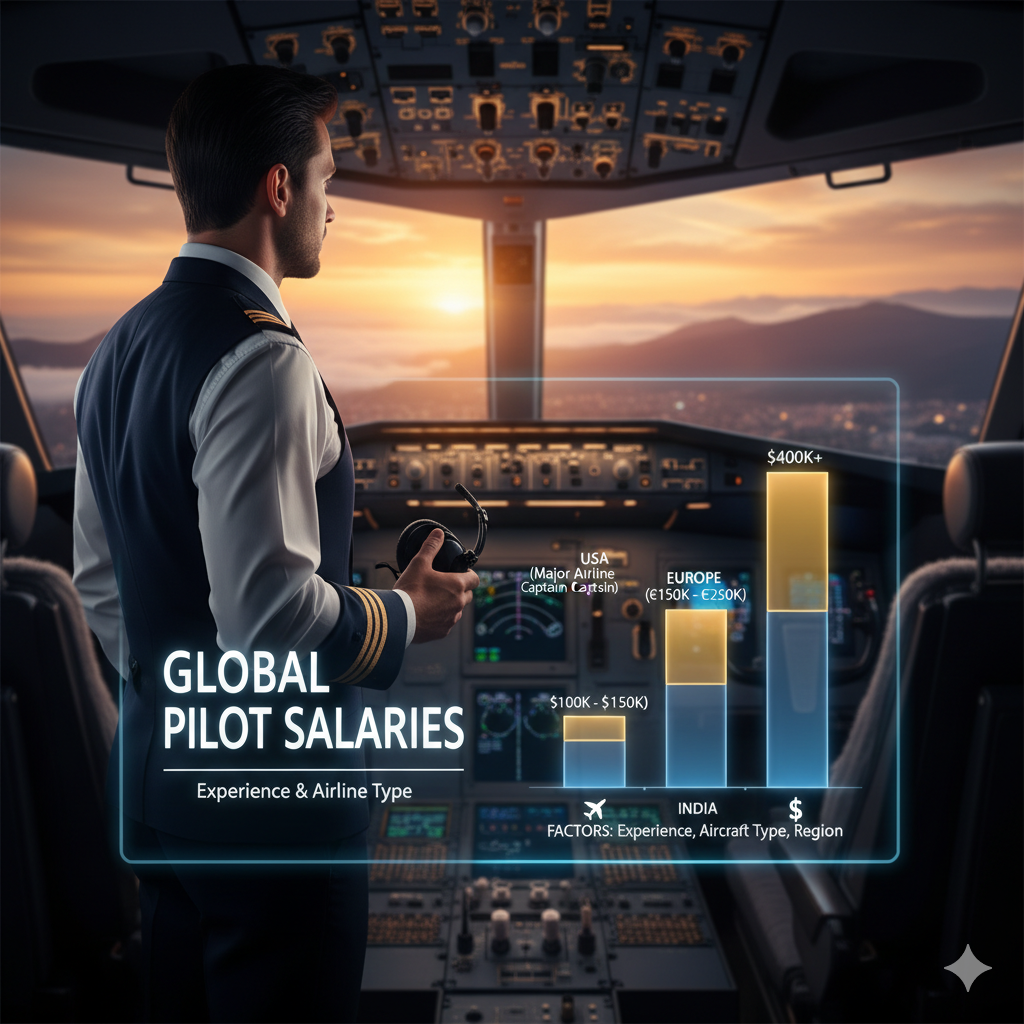
How Much Do Pilots Really Earn?

When we think of Pilot Salaries Around the World, beyond the sharp uniforms, glamorous travel and the breathtaking views from the cockpit, a question everyone secretly wonders is, “How much do pilots actually make?” While it’s easy to picture a glamorous, high-paying job, the truth is a pilot’s salary is as varied as the destinations they fly to. It’s a number that changes dramatically based on things like the airline they work for, the size of the plane they’re flying, how many years they’ve been in the air, and even what part of the world they’re based in. Let’s take a closer look at what goes into a pilot’s paycheck and see how the big airlines reward their flyers with skywithwings.
What Determines Pilot Salaries?
It’s a common thought that all pilots make a ton of money, but the reality is that their paychecks are far from one-size-fits-all. A bunch of different factors decide how much a pilot actually takes home.
What Really Shapes a Pilot’s Paycheck?
The Airline Itself:
 Think of it like this: a pilot for a big-name international airline like Delta or Emirates will almost always earn more than one flying for a smaller, regional, or budget airline. The bigger the airline and its routes, the bigger the paycheck.
The Plane They Fly: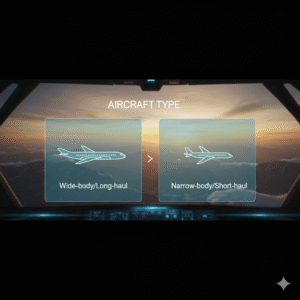
A pilot who’s in charge of a massive Boeing 787 on a 14-hour flight across the ocean is going to make more than a pilot flying a smaller jet on a short, domestic trip. Bigger planes and longer routes mean more responsibility, and that comes with a higher salary..
Experience and Rank:
This is a big one. A pilot starts as a First Officer (the co-pilot) and works their way up to Captain. Every year they spend flying, their salary climbs, but the real jump happens when they get to that captain’s seat.
Location:
A pilot’s salary can change a lot depending on where they are in the world. Pilots in places like the U.S. and the Middle East tend to have some of the highest salaries, while pilots in parts of Asia or Africa might earn less for the same job.
Union Power: 
In some countries, pilot unions are really strong. When a union can negotiate a good contract for its members, it often means higher pay, better working conditions, and stronger benefits for all the pilots at that airline.
Pilot Salaries in the United States 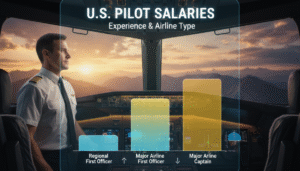
For many pilots, flying for a major U.S. airline is the ultimate goal, and the paycheck proves it. The United States is home to some of the biggest airlines on the planet, and they pay their pilots accordingly—some of the highest salaries in the world.
Just how much are we talking? Well, a veteran captain flying a big jet on a long international route for a major airline like Delta, American, or United can easily pull in anywhere from $300,000 to $400,000 a year.
But it’s not all six-figure paychecks right away. New pilots, often starting out as First Officers at regional airlines, might begin with a salary of around $50,000 to $70,000. The good news is that with a recent pilot shortage, those starting salaries are on the rise. With a combination of bonuses, overtime, and a pay scale that increases with experience, a U.S. pilot’s salary just keeps getting better as they climb the ranks.
Pilot Salaries in Europe 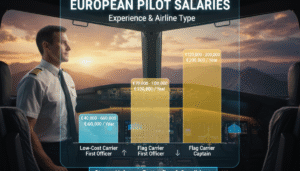
Over in Europe, the story of pilot pay is a little different. It’s really a tale of two different worlds.
If you’re a captain flying for a well-known, established airline like British Airways, Lufthansa, or Air France, you can expect a very solid salary, somewhere in the range of €120,000 to €200,000 a year. These are the classic, flagship carriers, and they pay accordingly.
However, if you work for a low-cost airline like Ryanair or Wizz Air, the numbers are typically lower. First Officers just starting out often make a more modest €40,000 to €60,000 in their first few years.
But here’s a major plus for European pilots: they’ve got strong labor unions and excellent worker protections. This means it’s not just about the money; it’s also about a guarantee of fair working conditions, job security, and great benefits.
Pilot Salaries in the Middle East 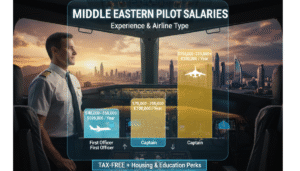
It’s no secret that the Middle East has become a global aviation powerhouse, with huge airlines like Emirates, Qatar Airways, and Etihad leading the charge. They’ve built their reputation by attracting top pilots from all over the world, and they do it by offering some of the most competitive—and generous—packages out there.
If you’re a captain flying a massive jet like a Boeing 777 or an Airbus A380 for one of these carriers, you can expect to earn a stunning $180,000 to $250,000 a year. And here’s the best part: in most cases, that salary is completely tax-free.
But the money is just the beginning. These airlines really go the extra mile to take care of their pilots and their families. Their contracts often include amazing perks like a generous housing allowance, coverage for your children’s school tuition, and annual plane tickets for you and your family. All of this combines to create a very attractive offer that’s hard for other airlines to beat.
Pilot Salaries in Asia 
When it comes to flying in Asia, the pay landscape is a really interesting mix of high rewards and big demands.
To get experienced pilots from all over the world, airlines in China, like China Southern and China Eastern, are offering a ton of money—we’re talking more than $250,000 a year for captains. The catch? Those massive paychecks often come with incredibly long and demanding flight schedules.
Then you have countries like Japan and Singapore, which are known for their stable and well-established aviation industries. The pay here is very competitive and reliable. For instance, a senior captain at a top-tier airline like Singapore Airlines can expect to earn around $180,000 a year. So while it might not be the highest number on the list, it comes with the stability and quality of life these countries are famous for.
Pilot Salaries in Australia 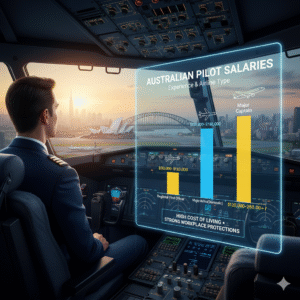
Down in Australia, the aviation market is pretty strong. If you’re a captain at a major airline like Qantas, you can expect a very healthy salary—somewhere between AUD 200,000 and AUD 350,000 per year, depending on how long you’ve been with the company and the type of aircraft you fly.
However, if you’re flying for a regional carrier, the pay is quite different. A First Officer at a smaller airline might start with a salary below AUD 100,000.
It’s worth remembering that a high salary in Australia is balanced by the high cost of living in big cities like Sydney and Melbourne. Still, pilots in Australia generally enjoy a fantastic standard of living and a solid safety net thanks to strong job protections.
Pilot Salaries in Africa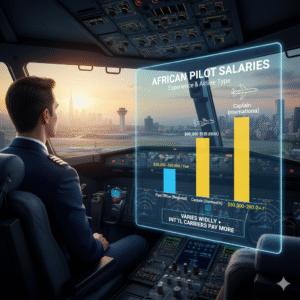
When you look at pilot salaries in Africa, it’s a real mixed bag.
For example, in South Africa, a captain flying for South African Airways can expect to make a solid $80,000 to $120,000 a year, but a First Officer might be looking at less than half of that.
In many other countries across the continent, the base salary can be lower, but it’s often sweetened with bonuses and other benefits. It’s also a big factor whether you’re flying for a major international airline based in Africa, like Ethiopian Airlines—those jobs tend to come with much higher pay compared to flying domestic routes.
Pilot Salaries in India
India’s aviation scene is absolutely on fire. With airlines like Air India, IndiGo, and Vistara rapidly adding planes to their fleets, the demand for pilots is skyrocketing, and so are their salaries.
What Pilots Earn in India
Captains: A senior pilot in India can pull in a fantastic annual salary, averaging somewhere between ₹75 lakh and ₹1.2 crore per year. For those flying big, wide-body jets like the Boeing 787 Dreamliner for a major carrier like Air India, that number can even go higher.
First Officers: When you’re a co-pilot, the salary generally ranges from ₹25 lakh to ₹45 lakh a year. The exact number depends on the airline you’re with and the type of aircraft you’re flying.
New Pilots: If you’re fresh out of flight school and just getting started as a First Officer, your salary might begin around ₹15 lakh annually. But don’t worry—with India’s booming aviation market, your pay will jump up pretty fast as you gain experience.
On top of all that, Indian airlines offer some great perks. Think free or heavily discounted flights for your entire family, housing or travel allowances, and performance-based bonuses that can really add up.
While pilot salaries here might not yet match the top-tier pay in the Middle East or North America, the relatively lower cost of living in many Indian cities means these earnings go a lot further. With the country’s aviation sector expanding at a breakneck pace, the future looks incredibly bright for pilots in India, with both career growth and salaries set to keep climbing.
Beyond Salaries: The Perks and Challenges 
Beyond the numbers and the perks, it’s worth considering the bigger picture of a pilot’s career. The path from a fresh-faced trainee to a seasoned captain is a long and challenging one, but for those who make it, the rewards are both personal and professional.
Many airlines offer perks such as:
- Free or discounted air travel for family
- Housing and relocation benefits (especially in the Middle East)
- Health insurance and retirement contributions
- Extra pay for overtime or long-haul flights
The Climb to the Captain’s Seat
The journey from First Officer to Captain can take anywhere from 5 to 15 years, depending on the airline and the state of the industry. New pilots typically start out at smaller regional airlines, flying shorter routes and gaining experience. It’s a crucial stepping stone, and while the pay might not be as high as at a major carrier, it’s where they build the essential flight hours and skills needed for the next big step.
Once they move to a major airline, they start at the bottom of the seniority list all over again. Seniority is everything in this profession—it dictates everything from your paycheck to your flight schedule, and how quickly you can get that coveted Captain’s slot.
The Future of Pilot Pay
The outlook for pilot salaries is extremely bright, and the reason is simple: a global pilot shortage. A large number of pilots hired during the industry boom in the 1980s are now reaching the mandatory retirement age of 65. This “retirement wave” has left a huge void, and airlines are scrambling to fill it.
This high demand, combined with the rapid expansion of fleets in places like Asia and the Middle East, means that airlines are in a bidding war for qualified pilots. We’re already seeing historic pay raises and improved contracts being negotiated by pilot unions, and this trend is expected to continue for the foreseeable future. For aspiring pilots, this is the best possible news, as it means faster career progression and even higher earning potential in the years to come.
The Future of Pilot Salaries
Good news for anyone dreaming of becoming a pilot: the global pilot shortage isn’t going anywhere anytime soon, and that’s a big reason why salaries are likely to keep climbing.
Airlines are already sweetening the deal to attract new talent. We’re seeing them raise starting salaries, give out big signing bonuses, and make the work-life balance a whole lot better.
As people start traveling more again and airlines add more planes to their fleets, the profession is set to remain one of the most financially rewarding out there. For anyone thinking about a career in the cockpit, this means that the time and money you invest in training could lead to a seriously high-paying and secure job for years to come.
Conclusion
When it comes to a pilot’s paycheck, there’s no such thing as a one-size-fits-all number. It’s a huge spectrum, with a senior U.S. Captain flying a big international jet earning a top-tier salary of over $300,000, while a new First Officer at a regional airline might be at the other end of the scale, making a fraction of that.
But no matter where they are on that scale, one thing is certain: pilots are paid well for the incredible skills, immense responsibility, and unique lifestyle that come with flying a plane.
For anyone thinking about a career in the cockpit, getting a feel for these global salary differences is an essential first step. And with the demand for pilots only growing, the future of the profession looks financially brighter than ever for those who are ready to take flight.
Frequently Asked Questions (FAQs) on Pilot Salaries
1. So, what’s the paycheck like for a pilot in India?
It’s a huge range, but generally, a captain can pull in a fantastic salary between ₹75 lakh and ₹1.2 crore per year. If you’re a First Officer, you’re usually looking at a solid ₹25 lakh to ₹45 lakh annually. The final number really comes down to the airline you’re with, the type of plane you’re flying, and how many years you’ve been in the cockpit.
2. Which country pays pilots the highest salaries?
The answer is pretty clear: the United States and the Middle East. A senior captain in the U.S. can make a stunning $300,000 to $400,000 a year. Meanwhile, Middle Eastern carriers like Emirates and Qatar Airways attract pilots with equally lucrative deals, often with the added bonus of their salaries being tax-free and including generous perks.
3. Do international pilots earn more than domestic pilots?
Yes, absolutely. Think of it this way: the bigger the plane and the longer the flight, the bigger the paycheck. Pilots flying those massive wide-body jets on international routes generally make a lot more than their counterparts on shorter domestic trips.
4. Are pilot salaries on the rise?
You bet! Thanks to a major global pilot shortage and a booming travel industry, airlines are in a bidding war for talent. They’re sweetening the deal by raising starting salaries, offering big signing bonuses, and negotiating much better contracts for their pilots. It’s a great time to be in the profession.
5. What other benefits do pilots receive besides salaries?
It’s not just about the salary. Pilots get some truly great perks, including free or deeply discounted flights for themselves and their family. In some regions, especially the Middle East, airlines will even cover your housing and relocation costs. On top of that, you can expect solid health insurance, retirement plans, and extra pay for working overtime or on long-haul flights.
6. Is being a pilot worth it in terms of salary?
For most aviators, the answer is a resounding yes. While the journey to become a pilot is a huge investment of both time and money, the career is incredibly rewarding. The strong pay, job security, and the unique opportunity to travel the world make it a fantastic choice for those who are passionate about flying.