
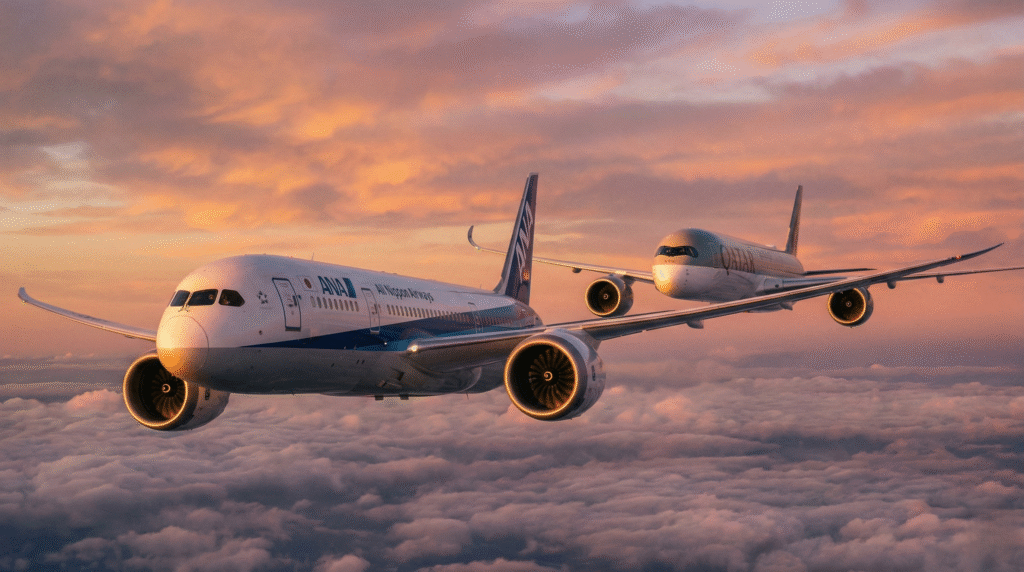
Boeing 787 vs Airbus A350: Which Is Better? A Detailed Comparison
The debate of Boeing 787 vs Airbus A350 has become one of the most exciting conversations in modern aviation. Both aircraft represent the future of long-haul travel—lighter, quieter, more fuel-efficient, and designed to reduce passenger fatigue. As airlines continue to expand global routes, these two wide-body jets have become the backbone of long-distance flying. Want to Know more about Aviation visit skywithwings.com for more information.

Overview of the Boeing 787 Dreamliner
The Boeing 787 Dreamliner is known for revolutionizing long-haul travel. Introduced with advanced composite materials, improved cabin pressure, and world-class fuel efficiency, the Dreamliner helped airlines open new ultra-long routes that were previously not profitable. It comes in three variants—787-8, 787-9, and the stretched 787-10—each designed to suit different mission requirements.
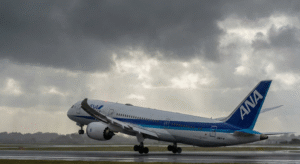
Overview of the Airbus A350 XWB
The Airbus A350 is often described as the smoothest and most modern long-haul aircraft. Designed with a wider cabin (XWB: Extra Wide Body), cutting-edge aerodynamics, and the ultra-efficient Trent XWB engines, the A350 provides a quiet, spacious, and future-ready flying experience. Available in the 900 and 1000 variants, it is built for long-range efficiency and superior passenger comfort.
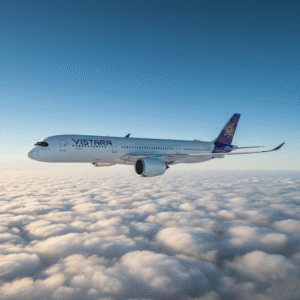
Cabin Comfort: Air Pressure, Humidity & Windows
Both the Boeing 787 vs Airbus A350 comparison shines in cabin comfort, but they take slightly different approaches.
The Boeing 787 features electronically dimmable windows, a lower cabin altitude of 6,000 ft, and improved humidity levels to reduce jet lag. The windows on the 787 are noticeably larger, giving passengers a more immersive view.
The Airbus A350, however, pushes comfort further with an even quieter cabin, a wider fuselage that results in extra space, and advanced air filtration technology. Many travelers find the A350’s cabin calmer, more open, and more ideal for long flights.
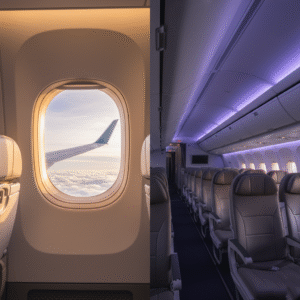
Seating & Cabin Width
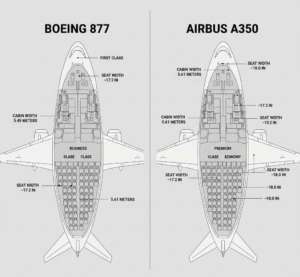
Cabin width defines the rivalry between the Boeing 787 and the Airbus A350. Specifically, the Airbus A350 boasts a noticeably wider fuselage, which delivers significant benefits:
-
Increased shoulder space
-
Broader aisles
-
The potential for wider economy seats
In contrast, while the Boeing 787 typically utilizes a 3-3-3 layout, its narrower frame constricts the passenger experience, particularly on long-haul flights. Ultimately, the A350’s wider cabin empowers airlines with greater flexibility when they configure economy and premium economy layouts.
Noise Levels & Ride Quality
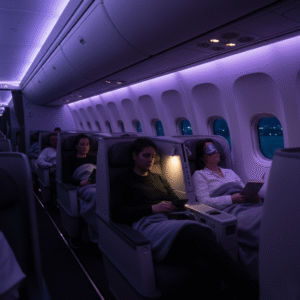
Regarding acoustic comfort, the Airbus A350 dominates passenger feedback. Specifically, the aircraft leverages advanced engines, a streamlined aerodynamic shape, and sound-dampening materials to generate one of the quietest cabins in the aviation industry.
Conversely, the Boeing 787 delivers a noticeably quieter experience than older generations of aircraft. Nevertheless, travelers frequently cite the A350 as the calmer environment, especially as the plane cruises at altitude.
Turbulence Handling: Which Feels Smoother?
Turbulence handling marks an interesting point of rivalry between the Boeing 787 and the Airbus A350.
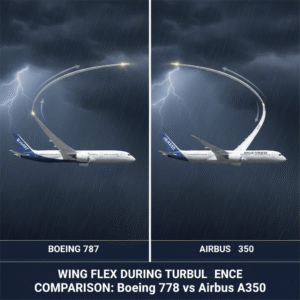
The Airbus A350 employs advanced flight control systems that adjust its control surfaces in real time to actively counter turbulence. Consequently, many frequent flyers experience a smoother ride, particularly when the aircraft encounters light to moderate chop.
Conversely, the Boeing 787 also delivers excellent handling. Its highly flexible wings absorb turbulence exceptionally well, effectively reducing the “bumpy” sensation that often distresses travelers.
Cockpit & Technology Differences
Pilots highly value both jets, but their underlying technology philosophies dictate significantly different cockpit experiences.
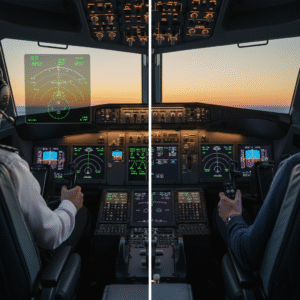
The Airbus A350 features the signature Airbus side-stick control system, a large touchscreen display suite, and highly automated systems. Consequently, the cockpit delivers a feeling that is sleek, modern, and highly intuitive for the flight crew.
Conversely, the Boeing 787 maintains the traditional yoke. However, it integrates this classic control with innovative heads-up displays (HUDs), advanced flight control systems, and a new-generation avionics suite. Thus, the 787’s cockpit achieves a futuristic feel while still successfully preserving Boeing’s familiar style and ergonomics.
Fuel Efficiency & Engine Performance
Fuel efficiency sits at the heart of both aircraft designs, driving the competition on long-haul routes.
The Boeing 787 Dreamliner earns its reputation for unbeatable fuel burn on medium to long routes. Its lightweight structure and optimized engines establish it as a favorite for airlines launching thinner, long-haul routes.
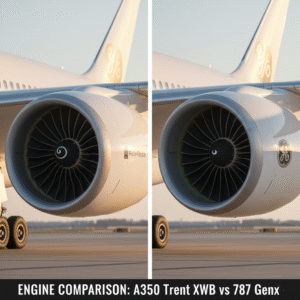
Conversely, the Airbus A350, which utilizes powerful Rolls-Royce Trent XWB engines, holds the title as one of the most efficient wide-body jets ever produced. Furthermore, on the very longest routes, the A350 often outperforms the 787 in the crucial metric of fuel per seat.
Range & Route Flexibility
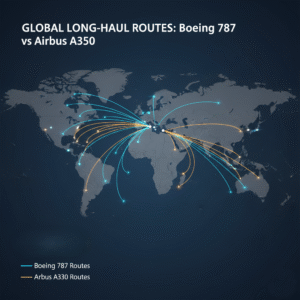
The debate between the Boeing 787 and the Airbus A350 ultimately depends on the specific strategic requirements that drive airline operations.
For example, the Boeing 787-9 excels on ultra-long routes, whereas the larger 787-10 optimizes performance for high-capacity, medium-long flights. These variations allow Boeing to cater to a wide spectrum of mission profiles.
Conversely, the Airbus A350-1000 delivers both extreme range and superior capacity. Consequently, this specific model often becomes the preferred choice for major flag carriers that regularly operate high-demand, long-haul international routes.
Passenger Experience: Which Do Travelers Prefer?
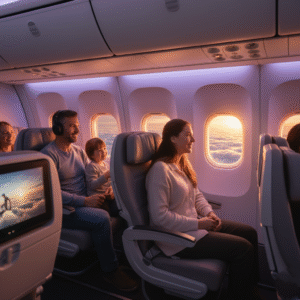
Passenger reviews frequently highlight the superb smoothness, spaciousness, and quietness of the Airbus A350. Consequently, many flyers describe the A350 experience as distinctly more “premium.”
Meanwhile, the Boeing 787 stands out by offering large windows, dynamic mood lighting, and a lower effective cabin altitude. This combination helps passengers reduce fatigue and combat jet lag more effectively.
Ultimately, both jets score exceptionally high in comfort; they simply achieve this goal through slightly different, yet equally compelling, design philosophies.
FAQs
1. Which aircraft is more comfortable: Boeing 787 vs Airbus A350?
The Airbus A350 generally offers a wider cabin and quieter ride, while the Boeing 787 provides better humidity and larger windows.
2. Which aircraft has better fuel efficiency?
Both are highly efficient, but the 787 dominates on medium-long routes while the A350 performs better on ultra-long-haul missions.
3. Do pilots prefer the 787 or A350?
Pilots enjoy both, but Airbus pilots prefer the side-stick design while Boeing pilots appreciate the HUD and handling characteristics.
4. Which aircraft handles turbulence better?
Passenger feedback often favors the A350 slightly, though the 787’s flexible wings perform exceptionally well.
5. Is one aircraft safer than the other?
Both meet the highest global aviation safety standards, making them equally safe.
Conclusion
The Boeing 787 vs Airbus A350 comparison doesn’t have a single winner—because each aircraft excels in different areas. The Dreamliner leads in fatigue reduction, window design, and route flexibility, while the A350 shines in space, quietness, and advanced ride stability. The choice ultimately depends on whether you value cabin spaciousness, window size, ride smoothness, or route performance.