

Soaring Through History: The Epic Flights That Defined Aviation
The story of flight isn’t just a history of machines; it’s a history of human dreams taking wing. It’s one of humankind’s greatest, most breathtaking achievements!
From the first fragile contraptions built with wood and wire to the mighty supersonic jets that shrink the globe and the rockets that punch through the atmosphere, every single milestone represents a colossal leap of innovation, courage, and pure, unadulterated exploration.
In this blog, we’re not just looking at dates and aircraft names. We’re going to feel the wind, hear the engines, and celebrate the most famous, death-defying, and world-changing historic flights that took aviation from a crazy idea to the reality we live in today. Get ready to explore the flights that truly changed our world!
Want to know more about aviation? Visit: Skywithwings
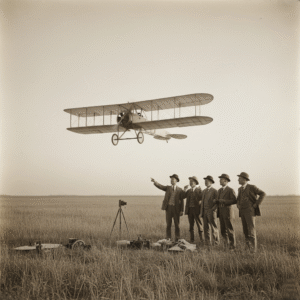
1. The Day Flight Got Real: The Wright Brothers (1903)
On December 17, 1903, history soared skyward.
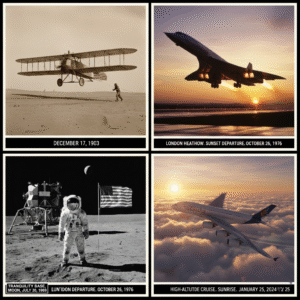
In Kitty Hawk, North Carolina, Orville and Wilbur Wright achieved the impossible. Their Wright Flyer made the first powered, sustained, and controlled flight. It only flew 120 feet. But that short hop changed everything. It proved human flight was possible, moving aviation from dream to reality.
Their genius introduced key concepts. We still use their ideas on propellers, wing warping, and controls today. The modern aviation world exists because of the Wright brothers’ sheer determination.
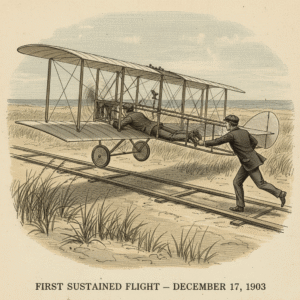
2. Connecting Continents: Louis Blériot’s Channel Crossing (1909)
Just a few years later, flight proved it wasn’t just a local novelty. On July 25, 1909, French aviator Louis Blériot took off for a monumental challenge: crossing the English Channel.
Consequently, his daring flight covered 36 kilometers between France and England. Ultimately, Blériot’s success proved a crucial point. It wasn’t just an experimental hop; it demonstrated the practicality of aircraft for international travel and, significantly, for military use.
Blériot’s Type XI monoplane signaled that aviation had a bright future. Therefore, this single flight showed the world that airplanes could truly connect nations and people.
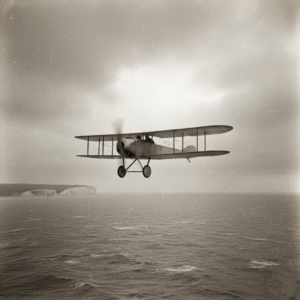
3. Conquering the Ocean: Lindbergh’s Solo Flight (1927)
If Blériot connected France and England, Charles Lindbergh truly shrank the globe.
In 1927, he achieved a legendary milestone. Piloting the single-engine Spirit of St. Louis, Lindbergh took off from New York. His goal? Paris, non-stop. After an exhausting 33.5 hours flying completely alone, he covered $3,600$ miles and successfully landed. He became the first person to complete a solo transatlantic flight.
Lindbergh’s sheer bravery instantly made him a global hero. His journey became the ultimate symbol of human endurance, innovation, and the raw spirit of exploration. Above all, his flight solidified aviation’s crucial role: connecting distant continents forever.
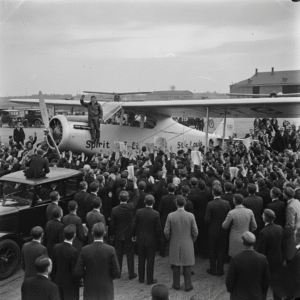
4. A Woman Conquers the Atlantic: Amelia Earhart (1932)
Five years after Lindbergh’s triumph, Amelia Earhart shattered a massive barrier.
In 1932, she flew solo across the Atlantic Ocean, becoming the first woman to ever achieve this legendary feat. Taking off from Newfoundland and battling harsh weather, she successfully landed in Ireland.
Her groundbreaking flight immediately made her a global icon. More than just an aviation record, Earhart’s courage proved the immense contribution of women to flight. Her determination continues to inspire everyone, showing that for those who dare, the sky truly has no limits.
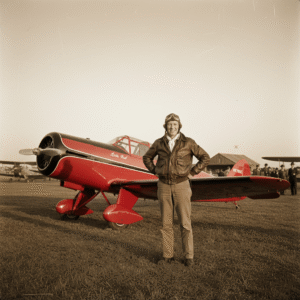
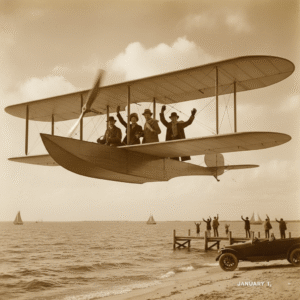
5. Taking Off for Profit: The First Commercial Flight (1914)
Less than eleven years after the Wrights’ hop, flight went from a brave stunt to a business model.
On January 1, 1914, the world witnessed its first-ever scheduled commercial airline flight. A Benoist XIV biplane flew between St. Petersburg and Tampa, Florida. The flight carried just one paying passenger, but that single ticket marked the true birth of the global airline industry.
This short, 23-minute journey proved a revolutionary idea: air travel could be both profitable and efficient. This single event, more than any record, truly laid the foundation for the massive network of commercial aviation we rely on today.
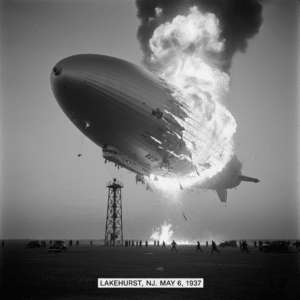
6. The Fiery End of an Era: The Hindenburg Disaster (1937)
Not all aviation milestones are triumphs; some are stark warnings.
The Hindenburg was a colossal German airship, the ultimate symbol of luxury travel in the 1930s. This “flying hotel” seemed to promise a smooth, elegant future for long-distance travel.
However, on May 6, 1937, that dream violently ended. While attempting to land in Lakehurst, New Jersey, the airship suddenly burst into flames, killing 36 people. The tragedy was captured on film and remains one of aviation’s most haunting events.
Consequently, this disaster immediately ended the era of passenger airships. It forced the world to pivot, placing a massive, non-negotiable emphasis on safety and design in the development of fixed-wing airplanes.
7. Beyond the Speed Limit: Chuck Yeager (1947)
After the war, the focus shifted from distance to pure speed.
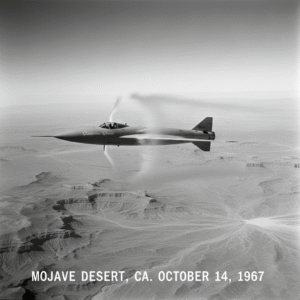
In 1947, U.S. Air Force pilot Chuck Yeager achieved what many thought was impossible: he broke the sound barrier. Piloting the sleek, rocket-powered Bell X-1 (nicknamed “Glamorous Glennis”), he flew faster than the speed of sound, officially soaring above Mach 1.
This deafening achievement marked the thrilling dawn of the supersonic era.
Yeager’s breakthrough directly drove massive innovation. It sped up the development of faster fighter jets, led to advanced engines, and eventually paved the way for high-speed commercial flight. The sky, it turned out, had an invisible speed limit, and Yeager smashed right through it.
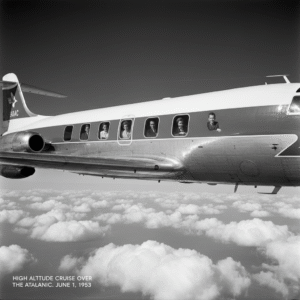
8. The Dawn of the Jet Age: The De Havilland Comet (1952)
Lindbergh conquered distance, Yeager conquered speed, and then the Comet conquered comfort and time itself.
In 1953, the De Havilland Comet changed travel forever. It was the world’s very first commercial jet airliner. Suddenly, passengers got speed, superior comfort, and a smoother ride high above the weather.
Unfortunately, early, tragic crashes due to metal fatigue cut its initial success short. Nevertheless, the Comet had already proven the jet concept. It absolutely paved the way for iconic jets like the Boeing 707.
This was the pivotal turning point: flying became faster and truly accessible to people all over the world, permanently shrinking the distance between continents.
9. To the Stars and Beyond: The Apollo 11 Moon Landing (1969)
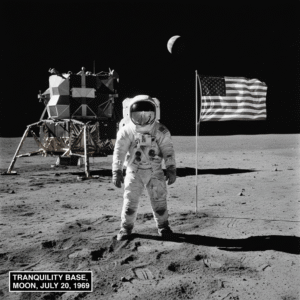
If the Wright Flyer started aviation, Apollo 11 achieved its ultimate expression.
On July 20, 1969, NASA’s Apollo 11 mission wasn’t just another flight; it was humanity’s greatest leap. Astronauts Neil Armstrong, Buzz Aldrin, and Michael Collins made history. The whole world watched as Armstrong stepped onto the Moon, taking his famous “giant leap for mankind.”
This mission proved how far flight had truly come. In less than seven short decades, we have gone from a fragile, wooden biplane flying 120 feet to building a spacecraft capable of traveling a quarter of a million miles to land on another celestial body. Aviation had become space travel.
10. Flying Twice the Speed of Sound: The Concorde (1976)
After reaching the Moon, aviation brought the rest of the world closer than ever before.
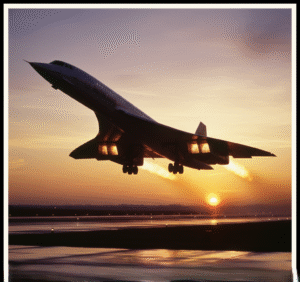
In 1976, the Concorde didn’t just fly; it redefined luxury and speed. This stunning supersonic passenger jet could cruise effortlessly at Mach 2, slicing transatlantic travel time to less than four hours. Developed through a bold collaboration between the UK and France, the Concorde became a brilliant symbol of elegance, technological ambition, and glamour.
Although it was retired in 2003, the Concorde remains a beloved icon. It serves as a powerful reminder of what aviation can achieve when groundbreaking innovation meets beautiful design.
The Ultimate Modern Giant: The Airbus A380 (2005)
The final achievement in this epic timeline isn’t speed, but sheer scale.
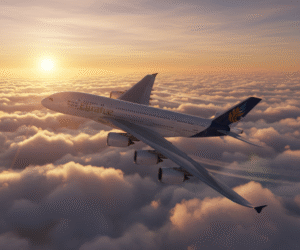
In 2005, Airbus unveiled the A380, the largest passenger aircraft ever built. This double-deck giant was engineered to carry over $800$ passengers, ushering in a brand new era of capacity and unparalleled comfort.
The A380 represents the absolute pinnacle of modern aviation engineering. It stands today as one of the world’s most recognizable aircraft—a towering, magnificent achievement built directly upon a century of the historic flights we’ve explored.
Conclusion: The Sky Has No Limit
From the humble hop of the Wright Flyer to the moon landing and the immense scale of the A380, the story of aviation is truly the story of human perseverance and genius.
These flights weren’t just about setting records; they were about changing the world. They turned distant lands into destinations and showed us that with enough courage and ingenuity, the sky really has no limit.
What part of aviation history interests you the most?
FAQs on Famous Historic Flights
1. Which flight is considered the first in history?
The Wright brothers’ flight in 1903 is considered the first successful powered and controlled flight.
2. Who was the first woman to fly solo across the Atlantic?
Amelia Earhart achieved this historic flight in 1932.
3. What was the significance of Charles Lindbergh’s flight?
It proved that long-distance solo flight was possible and inspired global aviation development.
4. What ended the era of airships?
The Hindenburg disaster in 1937 marked the tragic end of commercial airship travel.
5. What was the first commercial passenger flight?
The first commercial flight took place in 1914 between St. Petersburg and Tampa, Florida.
6. What did Apollo 11 achieve?
Apollo 11 made humans’ first successful landing on the Moon in 1969.
7. Why was the Concorde discontinued?
High maintenance costs, noise regulations, and limited profitability led to its retirement in 2003.